maysaloun faraj . iraqidatepalm                               beauty, innocence and pain...  captured with imagination and love

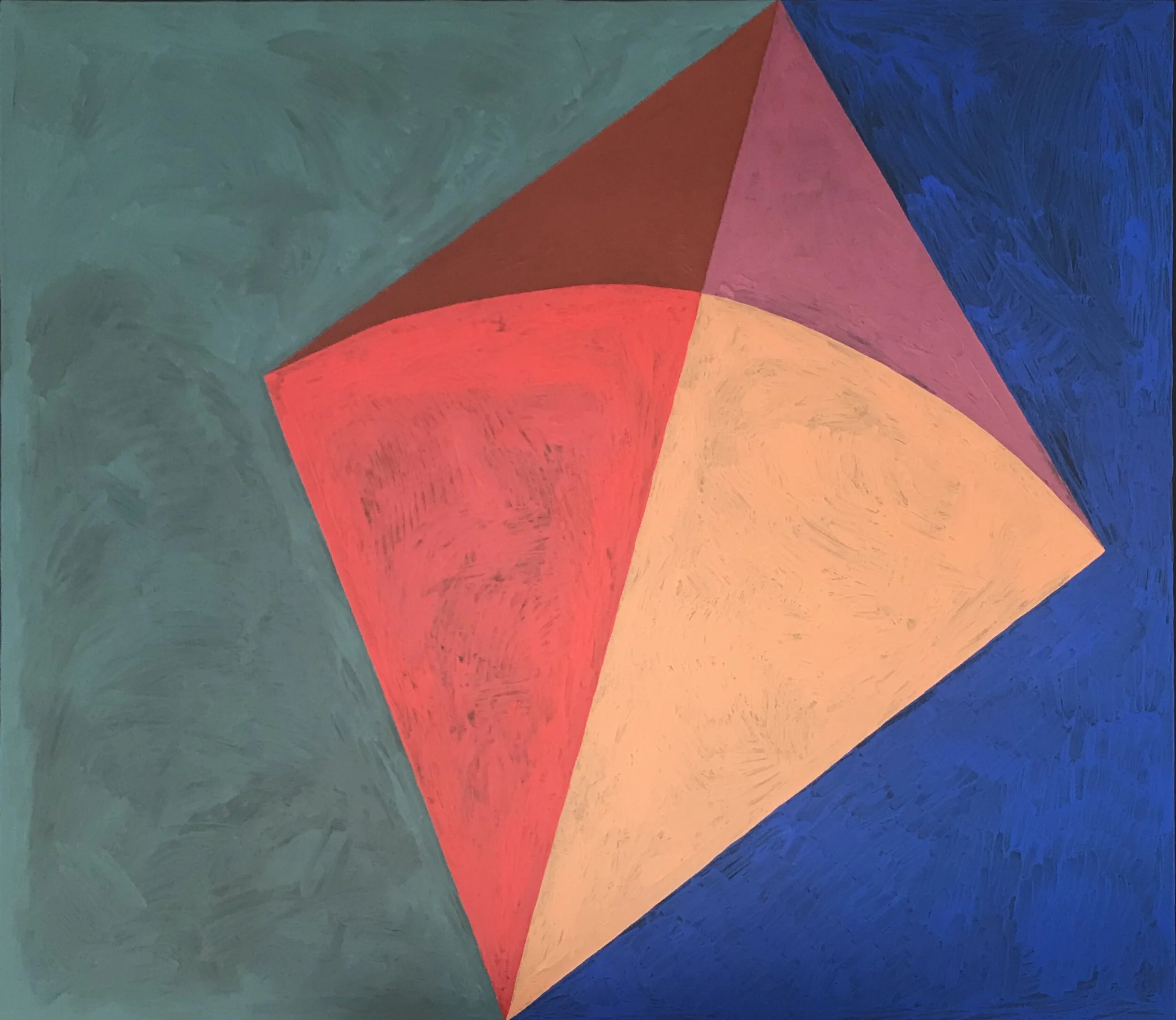
Letters from Dijla and Furat Earthstone  2003

Of proud Iraqi  parentage, born USA 1955.  Achieved BSc Architecture, College of Architectural Engineering, Baghdad University, 1978; pursued a career in the arts thereafter: painting & ceramics.  Living and working in London since 1982, over a period of 25 years,  Faraj has contributed to more than fifty group exhibitions at local and international level, won numerous awards and held fifteen one-woman shows to date.  Her artwork is in private collections world wide as well as important public collections including the British Museum London; the National Museum for Women in the Arts, Washington USA; the Wereldmueum, Rotterdam; the United Nations, Geneva and numerous art institutions throughout the Middle East. Recent group participations include:  Word into Art, the British Museum, London; Occupied Space: Art for Palestine, 27 Cork Street, London (2006)


Strokes of Genius: Contemporary Iraqi Art (UK & USA tour 2000-3); Islamic World Biennial, Tehran Museum of Modern Art, Iran; Calligraphy, Beit al-Quran, Manama, Bahrain (2002); Dialogue of the Present, tour UK (1999/2000); Artists for Human Rights, Durban, South Africa (1999); Forces of Change, National Museum for Women in the Arts, Washington (USA tour 1994-5); Arabian Eyes, United Arab Emirates (1995) and important others.

Fill my Heart with Sunshine: Iraqi Sunshine 50x70cm 2005 Private Collection     

Faraj is also the founder of iNCiA (International Network for Contemporary Iraqi Artists) formerly known as Strokes of Genius: Contemporary Iraqi Art and editor of the coinciding publication. She is also the founder/director of ayagallery London.

Weeping Palms: Stolen Childhoods17x28cm 2004 (ongoing)

further insight

Invited by the British Museum Maysaloun Faraj gave an illustrated talk about her work (1 July 2006) with particular focus on the use of the 'word' as part of the British Museum's groundbreaking Word into Art exhibition (May-Sept 2006) of which she was a participant.  The following is an extract (An Arabic translation by Munir al-Obaidi can be viewed at Elaph):

"Since as far back as I can remember, I was fascinated with making things; whether it was putting together bits of discarded candy wrapper or bottle caps to make 'designer' chandeliers or left over threads and textiles from my mother’s sewing kit to make haut’ couture for my Barbie (now a collectors item I’m told!), endless forms with play-doe and plasticine and colourful drawings with pencils, crayons and paints… all of which I found absolutely magical

I was born in the US in the mid fifties and lived their till the age of 13 before we went back home to Iraq.  During those formative years my family travelled extensively between different states wherever their studies or work took them.  I was constantly changing schools, which was not very pleasant as we never stayed long enough in one place to make any lasting friendships.  It was art however that helped me through this. My creativity seemed to attract the attention of those around me, teachers and students and obviously my parents, who encouraged and supported me right from the start.  This made me feel very special and art became for me as natural and as necessary as breathing; a pencil and pad accompanied me where ever I went, even to birthday parties and even to Fatihat (funerals)

My love and need for art was reinforced on our return to Baghdad.  Thanks to my mother I understood and spoke Arabic… to a certain degree.  However I had to ‘properly’ learn the language and found my first year at High School somewhat of a struggle.  Nussous Edebia (Arabic Literature; Prose and Poetry) was one subject I found particularly daunting.  Not only were we meant to understand and analyse sophisticated and highly complex poetry of the different eras spanning Shu’ara al-Jahiliya (Pre-Islam) to contemporary, moreover, we had to memorise each and every poem off by heart!  Whilst it was natural and dare I say easy for most of my fellow students, for me, it was almost impossible… had it not been for art.  Each poem I illustrated as a visual narrative alongside the margins.  It was the illustrations that I recounted when I had to recite the poem out loud in front of the class; a required practice in this subject.  I did the same with other lessons… excluding English of course! Not an inch was wasted; my books were covered inside out with…meaningful’ drawings.  With this, I quickly learnt Arabic and sailed through the rest of my education. It was not until later however that I truly appreciated the value of what we underwent. Had we not been driven to memorise poetry in that way I may still today not know any “ín” my heartand what a loss that would have been.

It was inevitable that Arabic in all its richness; the written word, music, culture, faith, people and poetry found its way deep into my heart and played a crucial role in my creativity.  The Iraqi poets Mohammed Mahdi al-Jawahiri, Muthaffer al-Nawab, Badir Shaker al-Sayab, Nazik al-Malaika and Arab poets including Nizar Qabbani, Jibran Khalil Jibran, Mahmud Darwish and most recently Ghassan Mattar continue to inspire me. Mattar’s poignant anthology Buka Fawqa Dem al-Nakheel (Crying over the Blood of Palms) which he wrote in 2003 with the advent of war on Iraq, bears striking resemblance to my own Weeping Palms: Stolen Childhoods paintings, which I also began that year.

Although I was born and brought up in the US, my growing-up years were essentially in Iraq.  From there, I graduated High School, made memorable friendships, married the love of my life, achieved a BSc in Architecture and went on to pursue a career in the arts thereafter.  The works of Iraqi artists particularly those of the late 1960s and 1970s, many of whose works are featured in the Word into Art exhibition, intrigued me. It was during that time I was introduced to the works of prominent artists like Saleh al-Jumai’e, Dia Azzawi, Rakan Dabdoub, Rafa al-Nasiri, Ismael Fattah and others through my husband the architect Ali Mousawi who incorporated many of their works in his buildings and architectural designs.  I also studied under the guidance of artists from earlier decades, namely Neziha Selim, sister of the eminent Jewad Selim and Nizar Selim.  The artist Faraj Abbu also taught at the Architectural Department during my student years.  In all, these circumstances had an intense effect on my work and reinforced my fascination with Iraqi arts in general.

A defining year in my life was when I turned 20; my sister suffered a near-fatal accident, my father (God bless his soul-passed away the day after making this presentation) had his first heart attack, my mother (then aged 40) was diagnosed with Parkinsons Disease and I had a miscarriage at six months of pregnancy.  Suddenly, the world around me and my understanding of it was rapidly changing… and so was my artistic output.  A new consciousness emerged and deeper values took shape.

An eight year war with Iran soon followed and in 1982 I came to live in London with my husband.  London eventually became my adopted home; it is here that I have had my three children and it is here that I have been able to develop my artistic vocation both in painting and ceramics.  Having left Iraq, a land in which I am deeply rooted and a people whom I dearly love, it was humanity and the human condition that interested and concerned me most.  As an Iraqi, an Arab and a Moslem woman with an East/West upbringing, it is conflict, war, injustice, human rights, human wrongs… and beauty lost, that informs much of my work today.

Relationships are at the core and a narrative that is often explored within.  The relationships we have with one another as human beings: man & fellow man, man & woman, parent & child, us & the ‘other’.  Relationships we have with nature; earth, land, the homeland, rivers; Dijla and Furat (Tigris and Euphrates); trees; the Iraqi date palm. Relationships with the past; history, the present and the future.  Relationships with our universe; the sun, moon, stars and skies.  Relationships we have with ‘ourselves’, ‘our’ own kind, ‘our’ language, ‘our’ culture, ‘our’ heritage, ‘our’ faith and ‘our’ people.  And Relationships we have with the invisible, the ultimate creative force; spirituality and faith have been for me a pillar of strength particularly in recent years where inconceivable atrocities are committed in the name of freedom and democracy and in the name of religionIt is the breaking down of these Relationships that troubles me as I find it a root cause for immense chaos and suffering… loss of innocence and beauty that could have been.

Given the state of our world; this so called new world order in between intensive bouts of art making, I often find myself questioning whether art really matters?  Is it necessary?  Does anyone care?  Where does it stand in the midst of all the violence, destruction and despair?  Again and again, I find the answers deep within and believe that if there is any chance for hope… if there is any chance for humanity, it will be on the hands of artists.  George Bernard Shaw once wrote ‘You use a glass mirror to see your face; you use works of art to see your soul’.  The human spirit is resilient and as long as there is soul, there will always be inspiration… there will always be art.

I look upon my art as a journey with a narrative that continues to evolve.  Just as it did when I was a little girl, art continues to help me face the challenges and demands of this brief passage we call life.  Through it I try to make sense of my being and my place in the world and hope that by doing so, I am able to make a difference, no matter how small.  I believe it is raindrops that cause rivers to flow… and I would be happy to be a raindrop… my existence would be justified.

So, despite that our women widow, our children suffer, our Date Palms weep and wither, our art continues...
once a beautiful Palm Grove in the south of Iraq, now a graveyard of decapitated Palms…


Ali Abbas whose limbs, parents and siblings were blasted/wiped out at the beginning of the war…there are thousands of Ali Abbas’s who were not fortunate enough to make it to our television screens…


And while I desperately try to capture that innocence and beauty forever lost, my aching heart silently beats mournful Iraqi Mawwals. A selection of the referred to artworks are featured throughout other sections of this website

biographical notes

selected group exhibitions

2006
- Words . Fragmented . Unbroken, ayagallery, London
- Word into Art, the British Museum                                                                        - - - Occupied Space: Art for Palestine, 27 Cork Street, London

2004
- Seed, Body & Soul: Artists against Depleted Uranium, London;
- Transitions, ayagallery, London

2003
- Cities of Iraq: Samarra to Baghdad (Islamic Culture in Focus), British Museum, London
- Symbols of Harmony: Contemporary Art from the Islamic World, Kent County Council, Maidstone, Kent, UK
- Expressions of Hope: Iraqi Art, ayagallery, London
- Diversity in Harmony, Centre for Arab American Studies, University of Michigan, Dearborn, USA
- Before. After. Now: Visions of Iraq, Deluxe Gallery, London

2002
- Islamic World Painting Biennial, Tehran Museum of Contemporary Art, Iran
- Calligraphy, Beit al-Quran, Manama, Bahrain
- Masterstrokes, October Gallery, London, UK

2001
- Contemporary Arab Art, Wereldmuseum, Rotterdam, Netherlands

2000-3
- Strokes of Genius: Contemporary Iraqi Art,
Tour UK: Brunei Gallery, London; Exeter University, Exeter; Hotbath Galleries, Bath and USA: Grinnell College, Iowa; DePaul University, Chicago (Iraqi Art Today, Looking Out: Looking In).

2000
- Arab Cultures: Young Worlds, British Museum, London

1999
- Artists for Human Rights, Durban, South Africa
- Dialogue of the Present, tour: England: London; Brighton; Brunell

1998
- 20th Anniversary: Egee Art, Soni Gallery, London

1997
- Homage to Jewad Selim, Kufa Gallery, London
- Art in Hammersmith, Riverside Studios, London
- Contemporary Women's Art, Museum of Mankind, London
- Breaking Down the Boundaries, Pits Hanger Gallery, London

1996
- Eastern & Icelandic Art: William Morris Centenary, Wimbledon Library, London
- Visions of East & West, Sayde Interiors, London
- Contemporary Arab Art, Arab-British Chamber of Commerce, London

1995
- Arabian Eyes, Bait al-Sirkal, Ministry of Culture & Information, Sharja

1994
- Forces of Change, International Council for Women in the Arts and the National Museum for Women in the Arts, Tour: USA: Washington; Chicago; California
- Culture & Continuity, Midlands Art Centre, Birmingham

1993
- Iraqi Art Festival, Gallery 4, London
- Roots, Imperial College, London

1992
- Out of Iraq, Camden Lock Market, London
- Arab Womens' Art Festival, Kufa Gallery, London
- Summer Art Show, Howard Gallery, London
- Iraqi Womens' Art, Kufa Gallery, London
- Portobello Festival, Argile Gallery, London
- Contemporary Collections, Artizana Gallery, Manchester

1988-91
- Argile Gallery Group Shows, London

1988
- Baghdad International Biennial, formerly Saddam Art Centre, Baghdad
- Autumn Show, Al-Orfeli Gallery, Baghdad
- International Women's Week, Brazil
- Arab Women Artists, Kufa Gallery, London
- Arab Art & Calligraphy, Egee Art Consultancy
- 126th Annual Society of Women Artists, Westminster Central Hall, London

1986
- Contemporary Arab Art, Mall Galleries, Arab States League, London

Selected Solo Exhibitions

1995 Once Upon a Culture, SOAS (School of Oriental & African Studies) London
1994 Oriental Delight, Trocadero Centre, London
1992 Sisters in Harmony, London
1990 Ya Rab, Rochan Gallery, London
      - Faith, Argile Gallery, London
1989 Home Sweet Home, Artists Studio, Baghdad
1987 Nostalgia, Artists Studio, London
1985 Vibrations from my Past, Espace 2000, Paris

Awards

1995 Highly Commended Daler & Rowney, London
1983 First Prize, Ministry of Education, Baghdad
1973-8 First Prize, Architectural Department, Baghdad University
1973-5 Honourable Mention, Institute of Fine Arts, Baghdad
1970 First Prize, Iraqi History Museum

Selected Public Collections

- British Museum, London, UK
- National Museum for Women in the Arts, Washington, USA
- Rotterdam Werldmuseum, Rotterdam, The Netherlands
- United Nations, Geneva, Switzerland
- University of Michagan-Dearborn, USA
- Jeddeh International Airport, Saudi Arabia
- The House of Commons, London, UK

Selected Private Collections

Throughout the MiddleEast, UK, Europe and the USA as well as in the private collections of HRH Prince of Wales and the late Sir Wilfred Thesiger.

Press & Media 

Extensive coverage through international news networks including Channel 4, BBC World, CNN, PBS, BBC World Service, Bloomsberg, local TV stations such as Rotterdam TV and prominent Arab News Networks including the MBC, Dubae and Sharja Channels as well as main Arab press & media including Al-Sharq al-Awsat, Al-Hayat, Majallat al-Majjaleh, Al-Distour, Bayan, Hawadith, Alif Ba', Al-Arab, Al-Ahram, Al-Wasat, Al-Afak Arabia, Al-Sayad, Al-Khaleej, Gulf News, Baghdad Observer, Sayidaty, Al-Shorouk, Kul Al Usrah and many others in addition to numerous websites.

Memberships

- Crafts Potters Association
- London Potters
- Women's Art Library
- National Artists Association
- Artist Newsletter
- Society of Fulham Artists
- Society of Iraqi Artists in Britain
- EU-MAN (European Union for Migrant Artists Network), Helsinki, Finland

© maysaloun faraj 2007

No part of this website may be reprinted, reproduced or utilised in any form by any electronic, mechanical or other means, now known or hereafter invented, including photocopying and recording or in any information storage or retrieval system or otherwise, without previous written permission by the copyright holder.